1.Course A
Content: This course will be covering college algebra.
Instructor(s): This course is taught by various adjunct and full time professors who are very familiar with the content who have differing degrees of tech skills and online teaching experience. The same class has to serve for all instructors.
Students: All students in the course are college freshmen and sophomores with good technology skills and each has successfully taken an online orientation to online learning course.
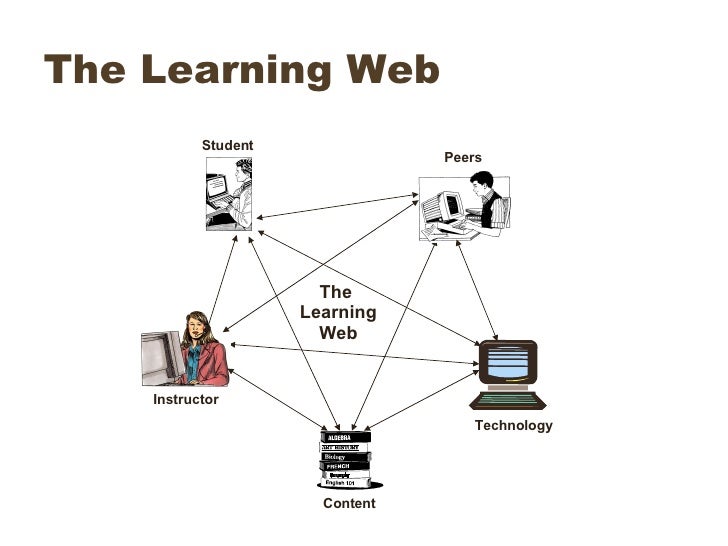
My first thought is why is college algebra taught online? It may be fully convergent, which means your answer is either right or wrong, but I know in math I needed to see my teacher go over a problem over and over again to grasp the concept. Yet, what strikes me as the most difficult are the various and full time professors who are familiar with the content, but have differing degrees of tech skills and teaching experience. How do we get the professors to agree with how the course should be taught? This comes down to preference and the professors should form discussions about how to teach the students clearly and practically. Fortunately, the students seem adequately prepared and have taken an online orientation to there online course. My only concern would be their levels of motivation considering they are only freshman and sophomores. According to Jason Rhodes’s, Roles and Responsibilities of the Online Instructor, students, peers, instructors, technology, and content make up the learning web. These five components feed off one another and if they are missed, the web falls. That’s just it. The body of people within the course must establish a connection with each other in order for the web to successfully merge and intertwine into meaningful discussions.
Course B
Content: The course is a philosophy leadership class.
Instructor(s): The instructor is an experienced face-to-face instructor with good tech skills and prior online teaching experience. This instructor prefers lecture and discussion classes.
Students: Graduate students who are well motivated and with a broad range of technology skills, from average to very advanced.
Philosophy embodies divergent content and the course will probably be based on philosophical viewpoints and student free-writes. Therefore, the fact that these students understand how to navigate online is very promising. My concern is that the professor prefers lectures and discussion classes, which means he can teach online, but he would much rather have face-to-face time. Why not look into a hybrid course, like ETEC 500. The professor can see the students a few times a quarter, discuss the viewpoints of Hume and Socrates, and then call it a day. The instructor needs to make sure that his/her preferences do not dominate the course seeing as the students are highly advanced in technology and obviously signed up for an online class for that reason.
Course C
Content: The course is an introduction to college success. It teaches study skills, communication skills, and tries to help students learn how to fit into the college community.
Instructor(s): This course will be taught by various instructors with good tech skills and prior online teaching experience but who have never taught this content before.
Students: Students are incoming freshman who have been identified by advisors as high risk for drop out.
Now, how do we design a course to instructors who have never taught this course before and students who have no desire to be in school? This is where content and creativity are crucial. While searching the web, I came upon a great site called Diigo. According to Diigo, “Diigo is a powerful online research tool and collaborative research platform that integrates several key technologies, including social bookmarking, web annotation, tagging, and group-based collaboration, to enable a whole new process of online knowledge management and participatory learning in the 21st century" (Diigo). This site sounds like the key to have the students understand college success when they can embody it in their Diigo findings. Typically, people who do poorly in school do so because they do not have the motivation and encouragement they need. In addition, this site utilizes social networking modules to get the students engaged. Check it out! Below are some ice breaker activities as well!
<http://adulted.about.com/od/icebreakers/tp/toptenicebreakers.htm>.
2
I find myself quite excited about the idea of developing an online course! However, I understand my personal preferences should not dominate the course. People are so different and absorb materials in so many different ways that my personal way of teaching should not be to narrow. The development of my course will be based on careful observation and the recollection of my past experiences taking online courses, which included that of business and Art History. First and foremost my content will be straightforward in nature. Some online courses are already difficult enough to maneuver and navigate through. The last thing any student wants is to have to answer a philosophical question in order for an assignment to open for them. My methodology will be to develop convergent content with holistic application. For example, according to Horton’s E-learning by design, “Design involves judgment, compromise, tradeoff, and creativity” (3). Online courses need to be seen as a give and take relationship and not dominated by instructor rules. My idea of convergent content is through social learning webinars and the typical virtual learning environment, i.e. a syllabus, weekly assignments, and insightful papers on hands-on work in the field. Where does the holistic approach I discussed come in? Convergent content should also be visual and sensory-- i.e. hands-on assignments that include online surveys and the discussion its results.
I may be playing it safe with wanting usual and customary content, but I would never want to bite off more than I could chew. I appreciate Horton when he states, “Unless you get instructional design right, technology can only increase the speed of certainty and failure” (3). Technology is here to stay and can overtake a course if permitted. It is the responsibility of the instructor to get applicable content mastered and placed online and to leave the selection of media last. In addition, recall content translates very closely to a face-to-face course. As an instructor, you never want to be too explicit in your online course. Where would the creativity ever come in if you told your students exactly what to do and when to do it. This is why some courses should never be offered online. According to Professor Newberry’s webpage lecture, chemistry is such a hands-on course (i.e. labs) (2), would it be a good idea to offer it online? I believe it would be a disservice for any student to take it online. Not only would the student be confused half the time with the concepts of moles, balancing equations, and memorizing the periodic table of elements, but the class would lose its essence. Where are the labs? What’s the use if you can’t wear the cool goggles! Creativity in courses like chemistry, biology, and physics comes from the lab trial and error process and through visuals. For the most part, chemistry is not divergent in content and lacks creativity in the way it is taught. Well, what I mean to say are courses like art history, e-learning, and even some business courses could potentially be offered online because they have some abstract qualities that can be questioned, discussed, and tested.
What about the most important stakeholder?!- -The Student. First, the key to success is to be highly motivated and ready to learn. Some online courses are so fast-paced that the student might not even have the time to think. As stated before, Horton emphasizes that "design involves judgment, compromise, tradeoff, and creativity" (3). If a student is not willing to engage in effective time management, open their minds, think outside the box, and even be ready to compromise--then they need to get out ASAP. What I may see as an effective and insightful module, the student may not. This is where thoughtful discussion MUST take place. The instructor should know the ins and outs of the course just as much as if it were face-to-face. However, what are the teaching preferences, practices, and techniques of an effective professor? Let’s find out--that’s where I want to be. However, let’s talk about the student first.
According to Lawrence Tech, students in their online course have a responsibility to "participate, take the program and themselves seriously, make sure they have a private place to learn and study, have reliable technology at all times, to be open-minded, think about ideas, be willing to speak up, take advantage of online anonymity, and become a true advocate of distance learning" (par. 3).
What about the professor? The instructor must establish clear guidelines, have criteria to assessing a student, and intervene when needed, etc. In addition, Roles and Responsibilities of the Online Instructor discusses the “4 Hats” of instructing that every instructor must use: the pedagogical approach, the social approach, the managerial approach, and the technical approach (Slide 12). These four hats will help the instructor navigate the course and keep the students engaged. As mentioned in the course scenarios, a resource that I think is so great is Diigo! It is an online source for students and instructors to share online information more effectively and efficiently. When taking an online course, one should take it into their hands to find new modes of teaching to help them learn. Let’s get started!
3 List the 11 Instructional Design Steps presented in Chapter 1:
1. Identifying underlying Goals
2. Analyze learner’s needs and abilities
3. Identify what to teach
4. Set learning objectives
5. Identify prerequisites
6. Pick approach to meet each objective
7. Decide teaching sequence of objectives
8. Create objectives to accomplish objectives
9. Create tests
10. Create learning activities
11. Choose media
Resources
Diigi:Why Diigo? Diigo Inc., 2012. Web. 25 September 2012. <http://www.diigo.com/teacher_entry/
education upgrades>.
Horton, W. (2011). E-Learning by Design, 2 edition.
Icebreakers. <http://adulted.about.com/od/icebreakers/tp/toptenicebreakers.htm>.
Icebreakers. <http://adulted.about.com/od/icebreakers/tp/toptenicebreakers.htm>.
LTU: Taking Responsibility for Online Learning. Lawrence Tech, 2012. Web. 26 September 2012.
Roles and Responsibilities of the Online Instructor. Slideshare, 12 June 2008. Web. 26 September
2012. <http://www.slideshare.net/jrhode/roles-and-responsibilities-of-the-online-
instructor>.